
Her Truth Translated
Editorials
Editorials
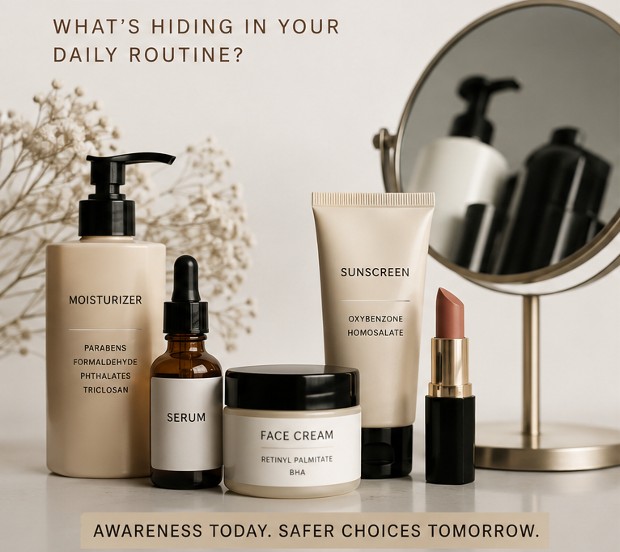
Cosmetic and personal care products are part of our daily routines which is shaped by self-care, culture, and personal expression. However, growing awareness of potentially carcinogenic ingredients in some products has raised concerns about ingredients and long-term exposure to these potentially toxic ingredients. As it can often be difficult to separate credible information from fear-driven messaging, in this editorial, we examine what the current evidence tells us, and how women can use that knowledge to make informed choices with confidence rather than fear.
Read More →
You might have heard the news that Polycystic Ovary Syndrome (PCOS) was renamed Polyendocrine Metabolic Ovarian Syndrome (PMOS)! But what does this mean for the everyday woman? Usually, a diagnosis begins with recognition of symptoms and patterns, but what if the name of a condition limits how we truly see it? In this editorial we explore how the name “PCOS” has shaped how people understand the condition and how research has continued to show gaps between women experiencing symptoms and those receiving a diagnosis.
Read More →
Entering a male-dominated field does not always mean being accepted within it. We examine how challenges to women’s authority, workplace marginalization, and exclusion from informal networks can affect belonging, career progression, burnout, and decisions to remain.
Read More →
Many women assume difficulty bonding with their baby means something is wrong, but science tells a very different story. In this editorial, we examine what the science reveals about postpartum depression and mother-infant bonding, why these challenges are more common than women realize and what these findings mean for understanding the realities of early motherhood.
Read More →
Most women apply various personal care products every day without giving much thought to the ingredients they contain. Yet over a lifetime, these products can represent thousands of individual exposures to different chemicals. As we discussed in the previous editorial, many chemicals may be linked to cancer risk. This article examines which ingredients are most concerning and help women to better understand how everyday choices fit into the broader picture of long-term health.
Read More →
For generations, women have been told that painful periods are simply part of being a woman. But when pain repeatedly disrupts your life, it deserves to be understood not dismissed as "just a period”. In this article, we explore how menstrual pain has been normalized, why many women delay seeking care, and what research reveals about the impact of dysmenorrhea (period pain) on women’s daily lives.
Read More →
Returning to work can make breastfeeding difficult to continue, even when a mother wants to do so. We examine how workplace policies, protected breaks, appropriate lactation spaces, supportive leadership, and organizational culture can shape breastfeeding experiences and outcomes.
Read More →
Gender-based violence (GBV) is often recognized by its visible injuries, yet some of its deepest wounds cannot be seen. Long after the physical, verbal, or emotional abuse has ended, many women and girls continue to carry psychological scars that shape how they think, feel, relate to others, and navigate daily life. In this editorial, we examine what the science reveals about the long-lasting psychological effects of gender-based violence and how women can begin to recognize these patterns, understand why they persist, and access care grounded in evidence rather than assumption.
Read More →
Fibroids are common, and many women may have them without experiencing symptoms. But when symptoms do occur, their impact can extend beyond the physical. Much of the focus is often placed on the size and number of fibroids, bleeding and anemia but the deeper effects can also affect a woman’s mind and emotional well-being. Living with chronic pain, heavy or unpredictable bleeding, fatigue from anemia, concerns about fertility or pregnancy, changes in body image, and the disruption of work, relationships, and daily life can contribute to stress, anxiety, low mood, and reduced quality of life. This editorial explores the impact of living with fibroids on women’s mental health; an often under explored aspect of fibroids and what the condition can mean for a woman’s mental wellbeing.
Read More →
Talk to us
Loading your conversation…